
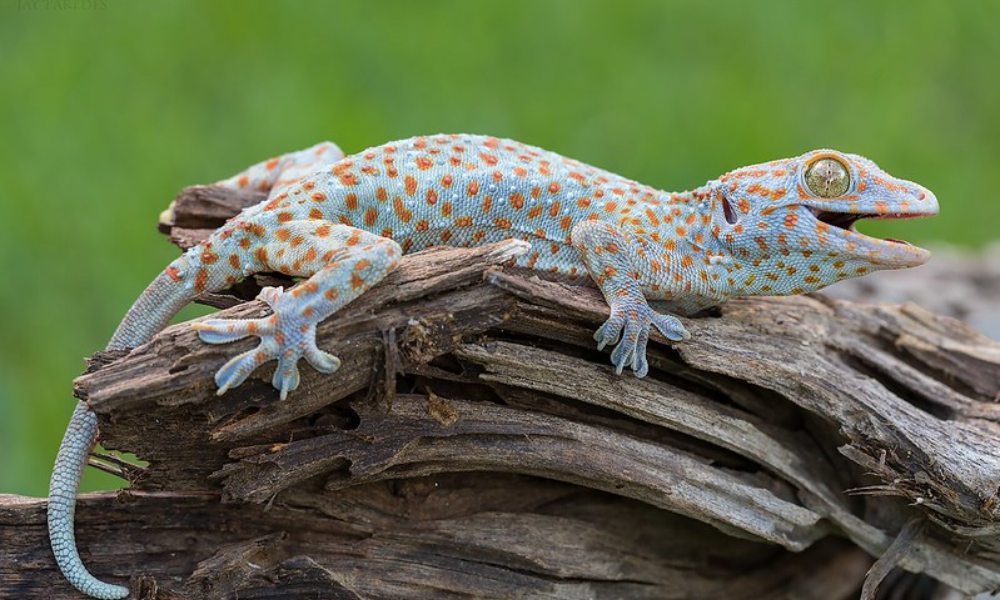
The Tokay Gecko (Gekko gecko) is one of nature’s boldest reptiles. Known for its “bite first, ask later” reputation, this gecko’s fierce attitude makes it a standout in the animal world. With striking blue-gray skin and red-brown spots, it’s easy to spot this medium-sized lizard in the wild. Tokay Gecko facts often focus on its fearless behavior, which can surprise even seasoned reptile lovers.
Native to Southeast Asia and parts of India, these geckos thrive in warm, humid climates. Their strong jaws and territorial nature make them top predators in their habitats. While some keep Tokay Geckos as pets, their aggressive temperament requires caution. Their story blends danger and beauty, making them both intriguing and challenging to observe.
Key Takeaways
- Tokay Geckos (Gekko gecko) are famous for their fearless, aggressive behavior.
- They have bright blue-gray bodies with red markings, setting them apart from other geckos.
- These lizards prefer tropical climates and are found in trees or rocky areas.
- Tokay Gecko facts include their powerful bite and territorial instincts.
- They’re rarely recommended as pets due to their defensive nature.
Introduction to Tokay Geckos
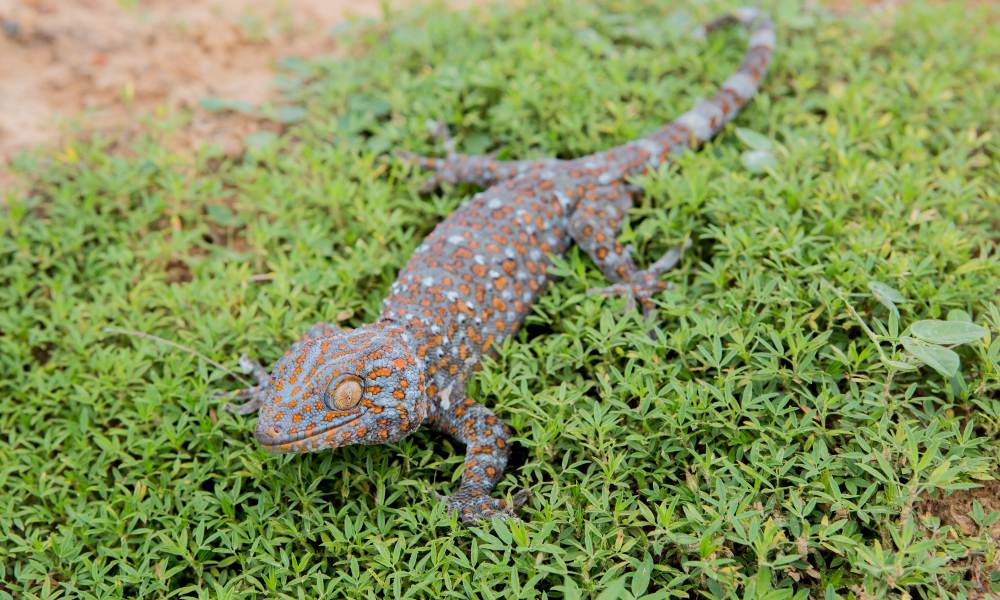
Tokay Geckos (Gekko gecko) are one of nature’s most intriguing reptiles. These nocturnal creatures combine bold behavior with specialized adaptations. Let’s uncover Tokay Gecko facts that explain their success in the wild.
Overview of Tokay Gecko Characteristics
Understanding their traits starts with basics like size and anatomy. Key features include:
- Size: Reaching 8–14 inches, they’re among the largest gecko species.
- Appearance: Gray or brown scales with blue accents and orange spots.
- Strength: Powerful limbs for climbing and gripping surfaces.
Unique Traits That Set Tokays Apart
What truly sets them apart? These traits stand out:
- Vocal Calls: Their “to-kay” cry warns rivals or attracts mates.
- Sticky Feet: Toe pads use microscopic hairs to cling to walls and ceilings.
- Bite Force: Jaws strong enough to crush prey, earning them their “bite-first” reputation.
- Defense Tactics: Tail shedding to escape predators, with regrowth over time.
These adaptations help Tokay Geckos dominate their environments, blending aggression with survival ingenuity.
The Natural Habitat of Tokay Geckos
Tokay Geckos (Gekko gecko) thrive in specific environments that shape their survival strategies. Their natural habitat spans tropical and subtropical zones across Asia, from India to the Philippines. Understanding these regions reveals how their lifestyle aligns with their surroundings.
Geography: Where to Find Them
Wild populations dominate areas like:
- India: Western Ghats and Himalayan foothills
- Thailand: Tropical rainforests and coastal regions
- Indonesia: Islands such as Java and Sumatra
- Philippines: Mountainous and urbanized zones
They’ve also become invasive in Florida, USA, and Hawaii, adapting to human-altered environments like buildings and farms.
Climate Preferences and Adaptations
These geckos prefer:
| Temperature | 75–90°F (24–32°C) daytime |
|---|---|
| Humidity | 60–80% relative humidity |
Adaptations include:
- Strong toe pads for climbing trees and walls
- Nocturnal activity to avoid daytime heat
- Camouflage patterns matching bark and leaves
These traits let them dominate in both wild and urban habitat settings. The Gekko gecko’s flexibility explains why they’re often spotted on house walls in their native regions.
Physical Appearance of Tokay Geckos
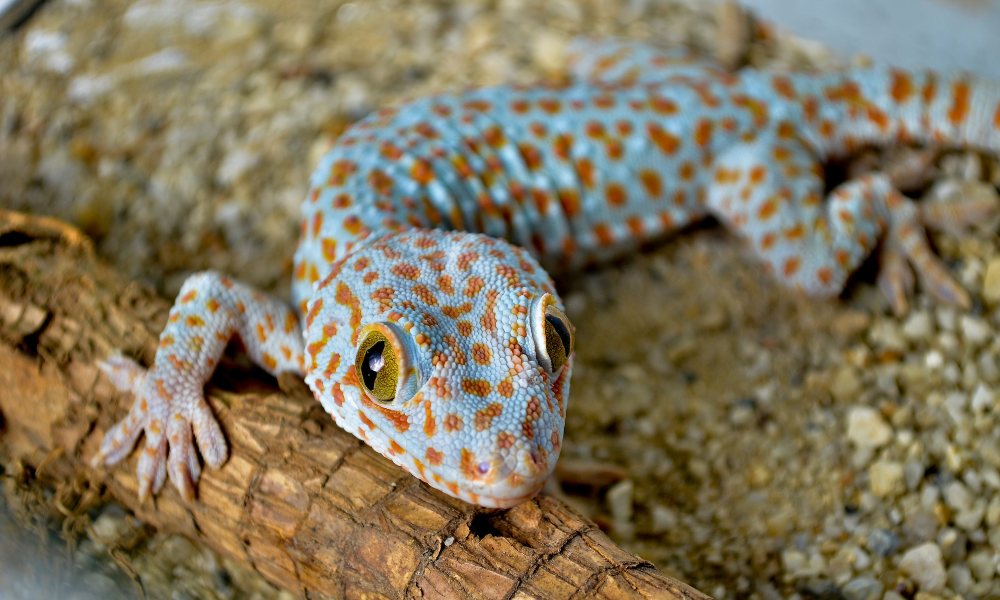
Tokay Geckos are a visual spectacle with features that blend toughness and beauty. Their size and color variations make them stand out, while their skin adaptations highlight their survival strategies. Let’s uncover these Tokay Gecko facts that define their striking looks.
Size and Color Variations
Adult males can reach up to 14-15 inches, towering over females, who are smaller. Their base color is a bold bluish-gray, accented by vivid orange or red spots. Captivity has bred stunning Tokay Gecko morphs, such as:
- Leucistic (pale with reduced pigment)
- Powder blue (darker base with contrasting patterns)
- Patternless (smooth, uniform hues)
Despite their bright spots, these colors help them blend into trees and walls—proof that flashy doesn’t mean obvious.
Distinctive Features of Their Skin
Texture and adaptability define their skin. Coarse tubercles give them a rugged, bumpy texture. They shed skin in one piece, like a snake, to shed parasites. Their toe pads, packed with microscopic hairs, let them cling to surfaces like glass. Plus, their skin shifts subtly with temperature or stress—cooling might darken their hues, while stress can intensify red spots. These traits turn their skin into a multitool of survival.
Behavior and Temperament of Tokay Geckos
Tokay Gecko behavior is as bold as their reputation. These geckos aren’t just aggressive—they’re strategic. Their actions, from territorial disputes to their infamous bites, stem from instincts honed over millennia.
Territorial Nature of Tokay Geckos
Wild Tokays mark their domains fiercely. Males use vocalizations and head-bob displays to warn rivals. Tokay Gecko facts show they’ll fight rivals repeatedly, even risking injury. In captivity, this translates to stress if their enclosure feels “too small.”
- Mark territories with scent glands
- Aggressive displays include open-mouth threats
- May attack anything that encroaches, even humans
Why They Are Known as ‘Bite First, Ask Later’
These geckos bite not out of malice, but survival. Their jaws clamp down with 30 times the force of their body weight—a Tokay Gecko behavior fact that makes handling risky. Bites can last minutes, and their teeth leave deep marks.
“A Tokay’s bite isn’t a choice—it’s a reflex,” says reptile biologist Dr. Lena Torres.
| Behavior Trait | Wild Survival Use |
|---|---|
| Biting | Deterring predators and rivals |
| Nocturnal activity | Hunting insects under cover of dark |
| Vocalizations | Marking territory and attracting mates |
Owners must learn their cues. A flattened body or hissing means “back off.” Taming them? Not likely. Their instincts are too deeply rooted. Still, patience reduces stress. Offer hiding spots and avoid sudden movements.
- Handle only when necessary
- Use gloves during feedings
- Respect their “personal space” zones
Understanding their wild instincts helps manage expectations. Their “attitude” isn’t defiance—it’s evolution.
Diet and Feeding Habits
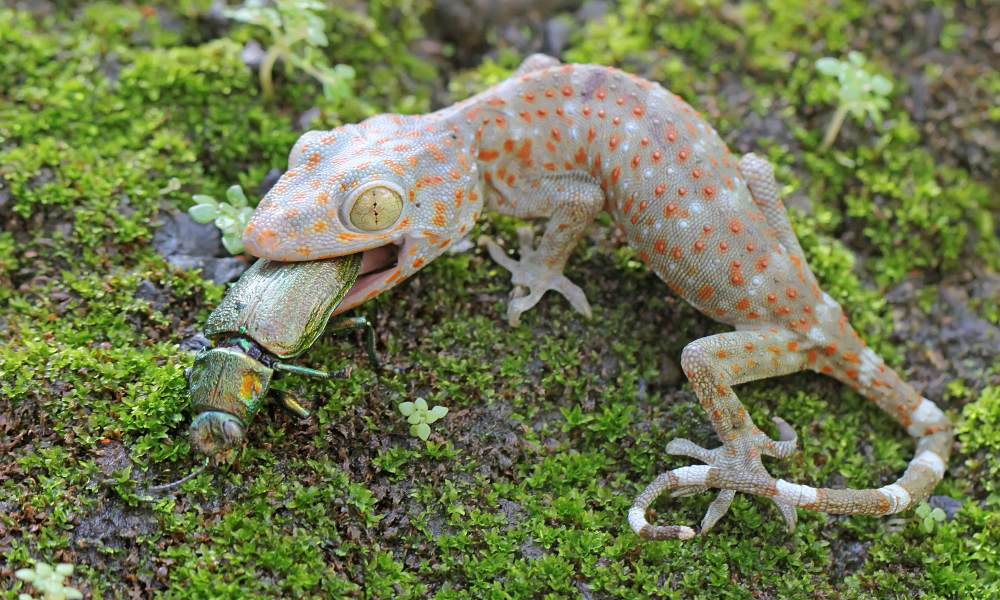
The Tokay Gecko diet revolves around a protein-rich menu shaped by their natural instincts. These nocturnal hunters thrive on live prey, making them vital predators in their ecosystems.
What Do Tokay Geckos Eat?
In the wild, their meals include insects like crickets, roaches, and moths. They also hunt small vertebrates such as lizards, frogs, and even nestling birds. Captive geckos require a balanced Tokay Gecko diet with gut-loaded insects dusted in calcium to prevent bone disorders. Here’s a breakdown of their preferred prey and nutritional benefits:
| Prey Type | Nutritional Benefits |
|---|---|
| Cricket | High protein, essential for growth |
| Mealworms | Calcium-rich, supports bone health |
| Small lizards | Wild diet mimicry, complete nutrients |
Hunting and Hunting Techniques
These geckos excel at ambush tactics. Key traits include:
- Night vision: Pinhole pupils detect prey in low light.
- Powerful jaws: Lock onto prey with serrated teeth.
- Agility: Adhesive toe pads catch insects mid-climb.
For pet owners, replicating these Tokay Gecko facts is key. Feed juveniles daily, adults every other day. Avoid overfeeding to prevent obesity. Wild instincts mean live prey激发捕猎反应, so movement triggers their hunting drive.
Breeding and Reproduction
Understanding how Tokay Geckos reproduce offers insights into their survival tactics and care needs. Their breeding cycle blends instinct and environment, making it a critical topic for both wildlife enthusiasts and pet owners.
Mating Rituals of Tokay Geckos
Male Tokay Geckos use loud calls—like their iconic “to-kay” chirp—to court females. These vocal displays often escalate into physical rituals, such as head-bobbing and tail-wagging. Males may even gently bite a female’s tail to signal interest. In the wild, breeding peaks during warm, humid months, but in captivity, stable conditions let them mate year-round.
Egg-Laying and Incubation
Females lay two eggs per clutch, attaching them to surfaces like tree trunks or enclosure walls. Eggs require 82–86°F temperatures for healthy incubation, which takes 4–6 months. Once hatched, babies instinctively hunt insects, needing no parental care. They grow quickly, reaching maturity in 1–2 years.
- Provide a humid nesting box with moist soil for egg-laying.
- Use a heat mat to maintain consistent incubation temperatures.
- Separate hatchlings to prevent aggression during growth phases.
Successful Tokay Gecko care demands attention to breeding details, from courtship cues to hatchling setups. Observing these phases reveals how these geckos thrive in diverse environments.
Lifespan and Health Considerations
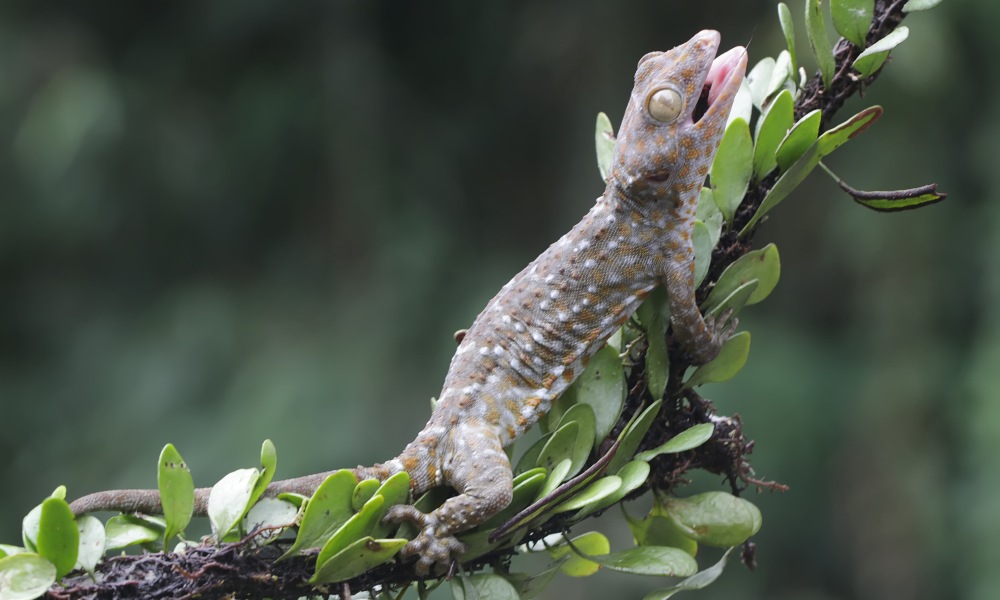
Maintaining a healthy Tokay Gecko requires consistent Tokay Gecko care. These reptiles thrive for 10–20 years in captivity when provided proper conditions. Understanding their needs ensures they live well beyond typical wild lifespans, which often reach only 5–8 years due to predators and environmental risks.
Average Lifespan in Captivity
A well-cared-for Tokay Gecko can reach 20 years. Key factors include balanced nutrition, clean habitats, and stress reduction. Genetics also play a role, but most lifespan variations stem from daily care routines. Avoid overcrowding and ensure UVB lighting to mimic natural environments.
Common Health Issues and Care Tips
Health challenges often arise from neglecting basic needs. Below are critical issues to watch for:
- Metabolic Bone Disease: Caused by calcium or vitamin D3 deficiency. Provide calcium supplements and UVB exposure daily.
- Respiratory Infections: Wet enclosures trigger sneezing or labored breathing. Maintain 60–70% humidity, not higher.
- Parasites: Visible signs include weight loss or lethargy. Quarantine new geckos and use vet-prescribed dewormers.
- Shedding Problems: Retained skin on toes or eyes signals low humidity. Mist enclosures daily and offer damp hides.
Regular vet checkups are vital. Keep records of feeding schedules and behavior changes. Always wash hands before handling to prevent infections. Prioritizing these steps turns Tokay Gecko care into a rewarding, long-term commitment.
The Role of Tokay Geckos in Ecosystems
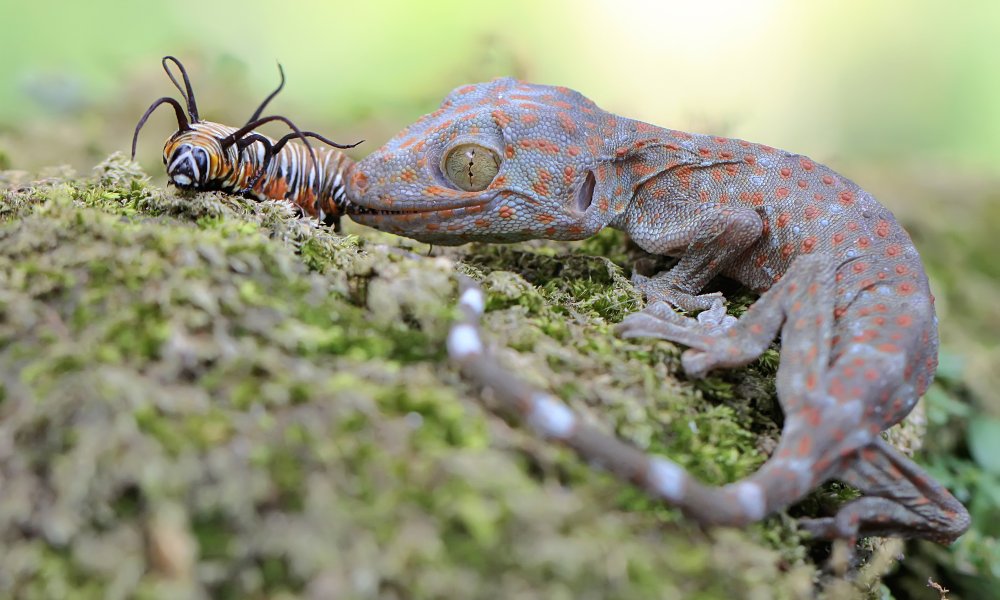
Tokay Geckos (Gekko gecko) are more than just aggressive reptiles—they’re vital players in their native ecosystems. These nocturnal hunters play dual roles as both insect regulators and links in complex food chains. Let’s explore how they shape their surroundings.
Pest Control Partners: How Tokay Geckos Help Humans
One of their biggest ecological wins? Tokay Geckos act as natural pest control. A single gecko can devour hundreds of insects monthly, including mosquitoes, cockroaches, and beetles. This makes them unintentional allies in rural and urban areas of Southeast Asia:
- Reduce disease-carrying insects like mosquitoes
- Limit crop-damaging pests like beetles
- Curb cockroach infestations around homes
Balancing the Food Web
As predators, Tokay Geckos keep insect populations in check. But they also serve as prey for larger animals like snakes, birds, and even monitor lizards. This makes them a critical middle layer in food webs. Their presence influences other species:
“Their hunting habits indirectly protect crops, while their role as prey supports predators like the changeable hawk-eagle,” notes a 2022 study on Southeast Asian biodiversity.
However, when introduced outside their native range—like in Florida and Hawaii—Tokay Geckos become invasive. Without natural predators, they outcompete native species for food and habitat. This shows how their ecological impact shifts when ecosystems are unbalanced.
Keeping Tokay Geckos as Pets
Thinking of bringing a Tokay Gecko into your home? These striking reptiles make fascinating pets but come with unique challenges. Before deciding, weigh their pros and cons to ensure they align with your lifestyle.
Pros and Cons of Pet Tokays
- Pros: Stunning appearance, long lifespan (15-20 years), and ease of feeding on insects.
- Cons: Aggressive temperament, loud nighttime calls, and escape-prone behavior. They dislike handling and thrive best as display pets rather than interactive companions.
Essential Care Requirements
A properly set-up enclosure is key to their well-being. Follow these guidelines for Tokay Gecko care:
| Aspect | Requirement |
|---|---|
| Enclosure size | Vertical 20-gallon tank minimum per gecko |
| Temperature | 75–85°F daytime; basking spot up to 90°F |
| Humidity | Maintain 70–80% via misting and water dishes |
| Lighting | UVB lighting 10–12% and full-spectrum bulbs |
Choose a secure enclosure with climbing branches and hiding spots. Clean the vivarium weekly to prevent bacterial growth. When looking to buy, prioritize breeders offering Tokay Gecko for sale who provide captive-bred specimens. Avoid wild-caught geckos, which often carry parasites and stress easily in captivity.
Conclusion: Embracing the Tokay Gecko’s Unique Character
Tokay Geckos remain one of nature’s most intriguing reptiles, blending fierce independence with survival prowess. Their bold Tokay Gecko behavior—from territorial displays to hunting tactics—reflects millions of years of evolution. For those considering them as pets, understanding these traits is key to providing proper care.
Recap of Key Points
From their vibrant skin patterns to their “bite first” attitude, Tokay Geckos thrive in environments matching their wild instincts. Proper husbandry includes humidity control, live prey diets, and respect for their defensive nature. Potential owners should research Tokay Gecko for sale from reputable breeders to ensure healthy specimens.
Final Thoughts on Their Attitude and Appeal
While their aggressive reputation may deter some, their unyielding spirit makes them captivating to dedicated reptile lovers. Their role as natural pest controllers highlights their ecological value. Owning one means valuing their wild essence rather than seeking a docile pet. Responsible care ensures these geckos remain a thrilling addition to any serious reptile keeper’s collection, without endangering ecosystems through improper release.
FAQ
What is the average lifespan of a Tokay Gecko in captivity?
Tokay Geckos can live between 10 to 20 years in captivity with proper care, including a suitable diet, habitat, and health monitoring.
What is the best diet for a Tokay Gecko?
In the wild, Tokay Geckos primarily eat insects such as crickets and roaches, but they also consume small vertebrates. In captivity, it’s essential to provide a balanced diet that includes calcium and vitamin supplements.
How can I create an ideal habitat for my Tokay Gecko?
Tokay Geckos thrive in a vertical terrarium that mimics their natural tropical environment. Maintaining humidity levels between 70-80%, temperatures ranging from 75-85°F, and providing plenty of hiding spots and climbing materials are crucial for their well-being.
Are Tokay Geckos good pets for beginners?
While Tokay Geckos are visually stunning and fascinating, they can be aggressive and may not be the best choice for first-time reptile owners. They require experienced handling and care.
What aggressive behavior should I expect from a Tokay Gecko?
Tokay Geckos are known for their territorial nature and may bite if they feel threatened. Recognizing their body language and handling with care is important to reduce the chance of aggression.
Do Tokay Geckos require UVB lighting?
Yes, providing UVB lighting is crucial for the health of Tokay Geckos, as it helps them metabolize calcium and prevents metabolic bone disease.
Can I find Tokay Geckos for sale in pet stores?
Yes, Tokay Geckos can be found for sale in pet stores and through reputable breeders. It’s best to seek captive-bred specimens to avoid health issues associated with wild-caught geckos.
What types of morphs exist for Tokay Geckos?
There are several Tokay Gecko morphs available, including leucistic, powder blue, and patternless varieties, each exhibiting unique colors and patterns due to selective breeding.
How do Tokay Geckos adapt to their natural habitat?
Tokay Geckos have adapted to their tropical and subtropical environments with specialized climbing abilities, nocturnal behaviors to escape extreme heat, and body temperature regulation by moving between sunlit and shaded areas.
What health issues should I be aware of with Tokay Geckos?
Common health problems include metabolic bone disease, respiratory infections, and shedding issues. Regular health monitoring and proper care can help prevent these issues.