

Meet the African Fat-Tailed Gecko: West Africa’s Quiet Survivor
You may have spotted an African Fat-Tailed Gecko at a reptile expo or in online herp groups—quiet, calm, and often overlooked next to its flashier cousin, the Leopard Gecko. But don’t let its subtle looks fool you. The African Fat-Tailed Gecko (Hemitheconyx caudicinctus) is a master of survival, with built-in adaptations that make it uniquely equipped for life in the dry, rocky zones of West Africa.
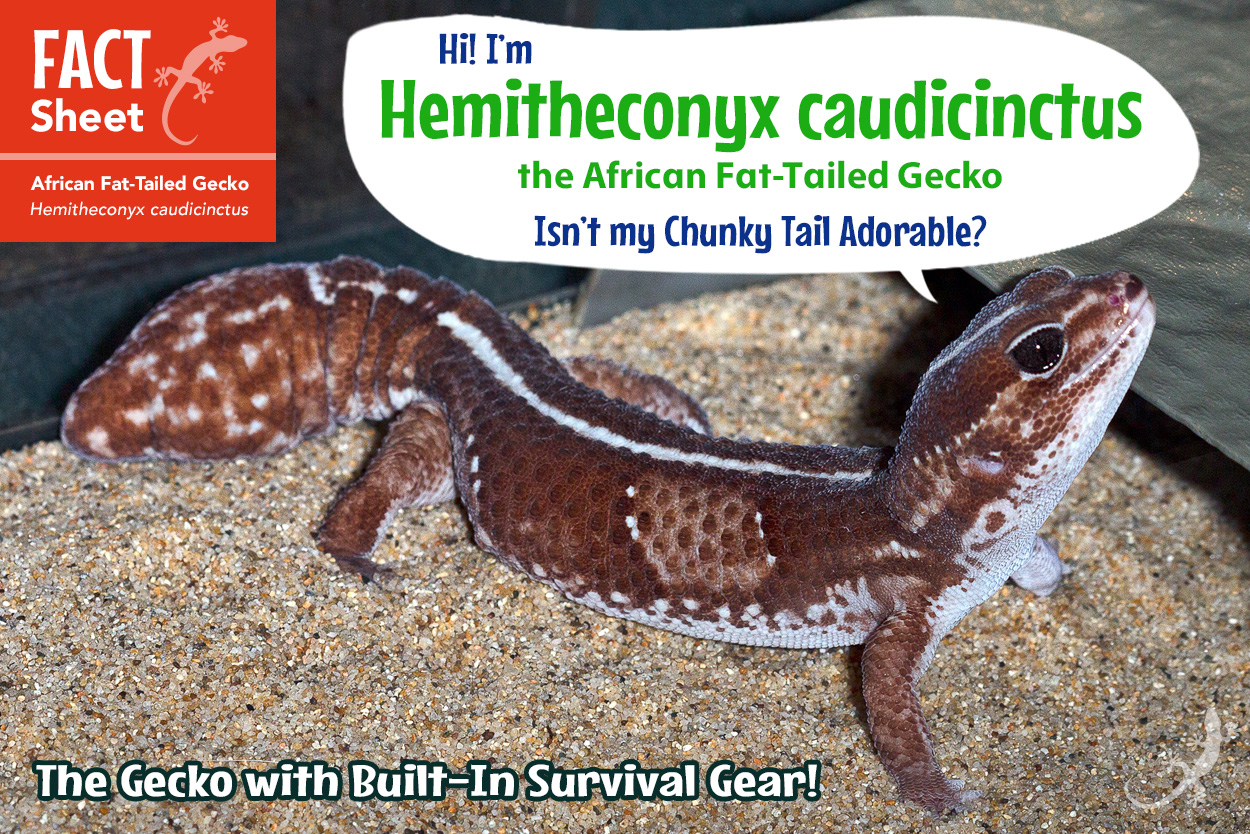
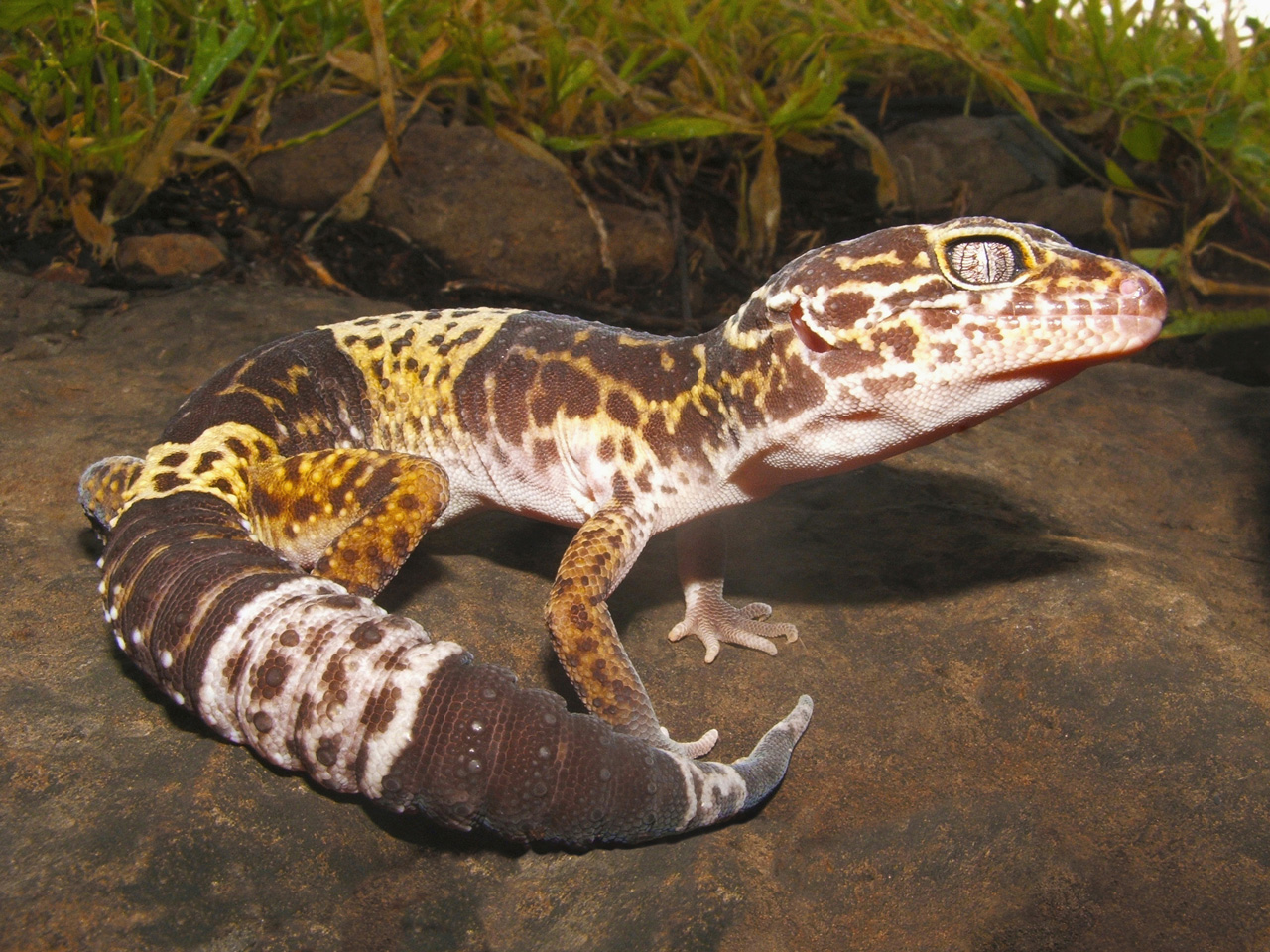
Photo credit: Flickr
It may not be the flashiest gecko around, but it’s gaining a loyal following—and for good reason. It is similar to the Leopard Gecko, but its rarity amongst collectors just makes it cooler in some ways, and the chunky tail adds a charm to this little guy. Read on for the fast facts about them; click the buttons below to quickly scroll down!






Table of Contents
- The Fat Tail: Built-In Survival Gear
- Eublepharidae Royalty: Getting Classification Right
- From the Sahel to Your Terrarium: Natural Habitat and Range
- A Closer Look: Physical Traits and Stunning Morphs
- Behavior by Moonlight: Nocturnal, Terrestrial, and Calm as Can Be
- Next Generation Geckos: Reproduction in the Wild
- Fat-Tailed Geckos in Captivity: A Growing Favorite
- Conservation Notes: Keeping It Ethical
- Fun Fact Corner
- Why the African Fat-Tailed Gecko Deserves a Closer Look
The Fat Tail: Built-In Survival Gear
That chunky tail isn’t just adorable—it’s essential. These geckos store fat and water in their tails, helping them push through dry seasons when food and moisture are scarce. Think of it as nature’s backup plan in gecko form.
They also have a wild defense move: tail autotomy. If attacked, they can drop their tail, which writhes to distract predators. It’s a smart trick, though costly—the tail does grow back, but slowly, and at great energy expense.
Eublepharidae Royalty: Getting Classification Right
The African Fat-Tailed Gecko belongs to the animal kingdom’s upper echelons of eyelid-wielding charm:
- Kingdom: Animalia
- Phylum: Chordata
- Class: Reptilia
- Order: Squamata
- Family: Eublepharidae
- Genus: Hemitheconyx
- Species: H. caudicinctus
These “eyelid geckos” (yes, they have actual eyelids they can blink!) share a family with the Leopard Gecko, but they project a calmer, more bashful vibe. While their cousin may be more extroverted, African Fat-Tailed Geckos are the quietly observant friends in the corner, ready to surprise you with a wave or a tail wiggle.
From the Sahel to Your Terrarium: Natural Habitat and Range
Native to humid corners and arid edges of West Africa, you’ll find these geckos hidden in savannas, scrublands, and rocky terrains across Nigeria, Ghana, Togo, and Benin. Their wild homes are not endless deserts; instead, Fat-Tailed Geckos hunker down in moist microhabitats. Look under a log or deep within a burrow after the rainy season, and you might spot one nestled, waiting for the world to cool down.
What fascinated me most when researching these geckos in the field was the artistry of their camouflage. The brown-and-white bands meld seamlessly into the scattered leaf litter or mottled stone, as if designed by nature’s own interior decorator.
A Closer Look: Physical Traits and Stunning Morphs
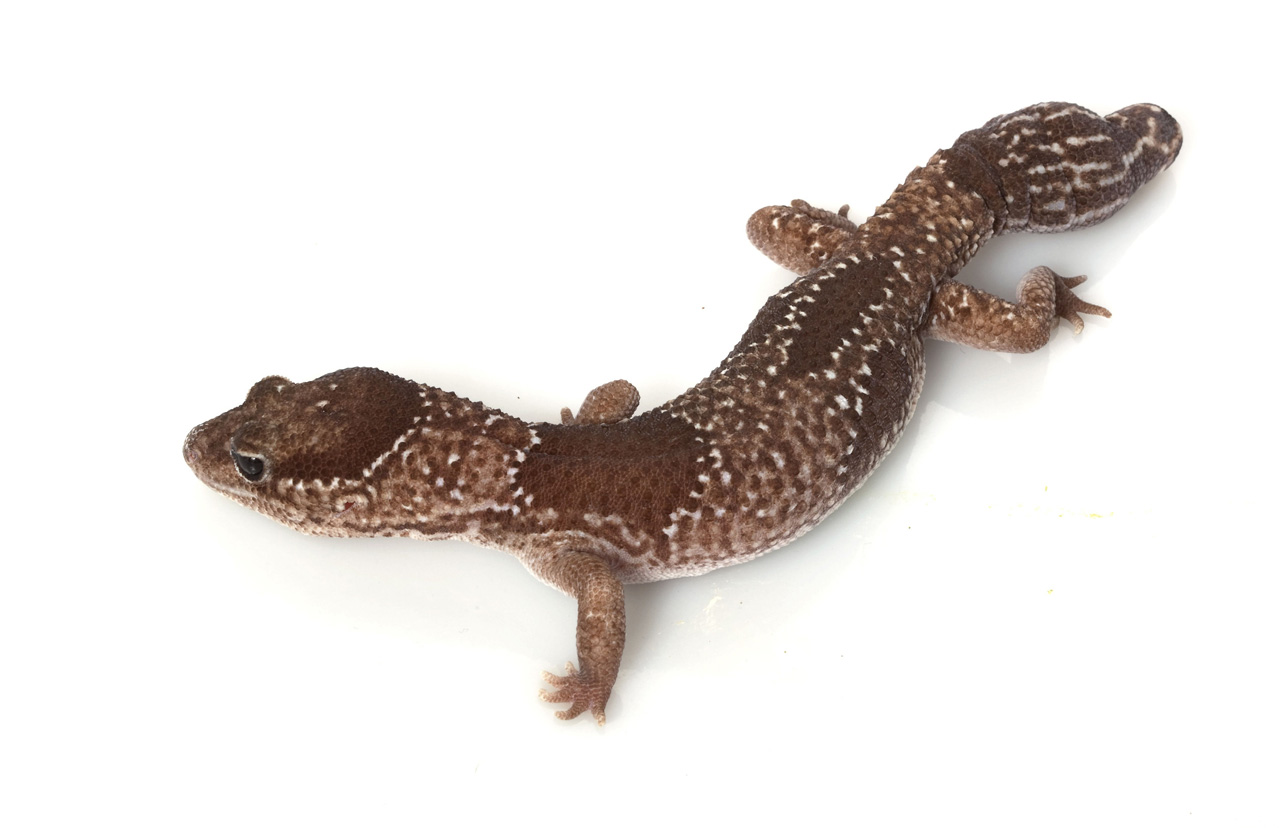
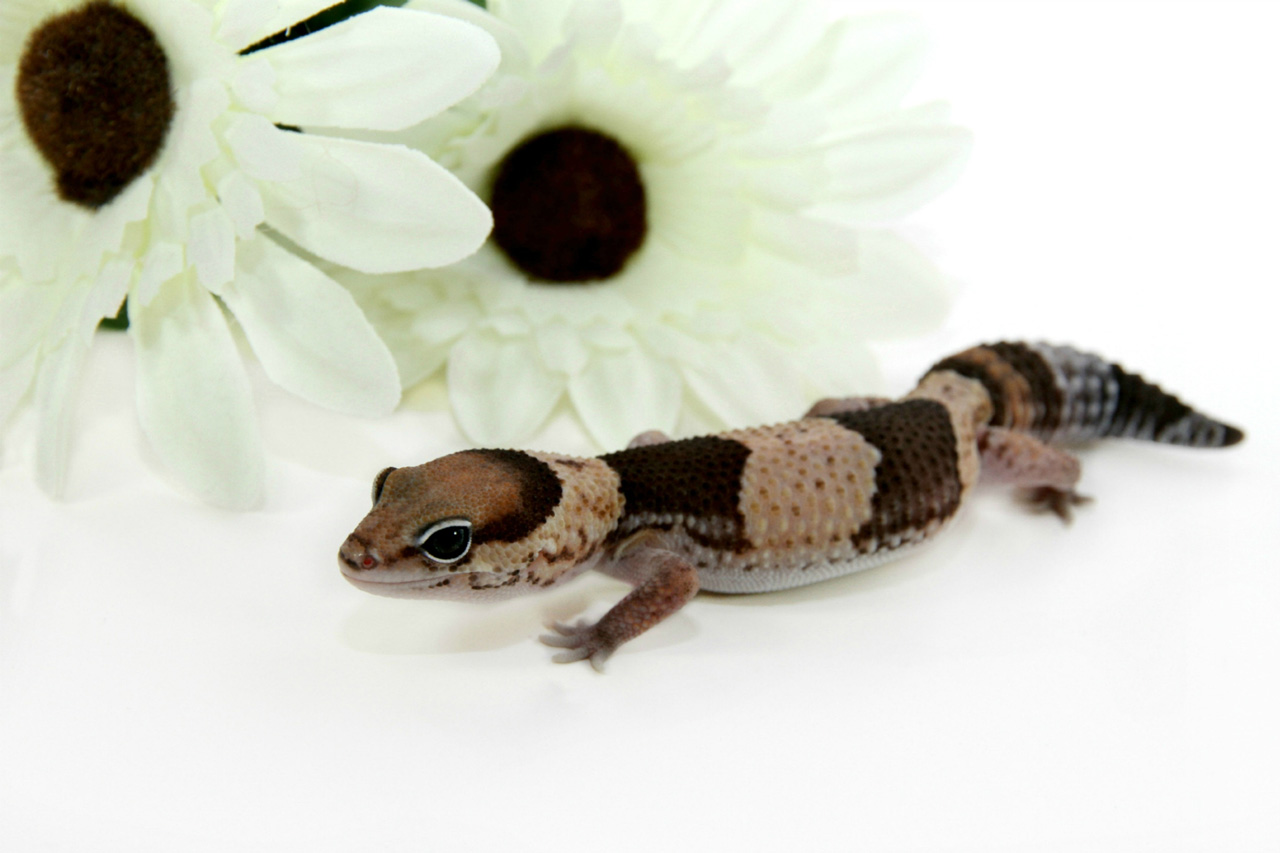
African Fat-Tailed Geckos are just the right size for most keepers, clocking in at 7–9 inches and weighing 40–70 grams. Their base coloration tends toward rich earth browns, banded with creamy white or pale yellow. Perfectly camouflaged!
But captive breeding has brought a rainbow of morphs to the stage. Prepare to swoon over albinos, patternless beauties, striking “white-outs,” and the ghostly “zero.” (Confession: the first time I saw a white-out in person I gasped. Yes, out loud.)
One cool quirk? No sticky toe pads! Unlike most house geckos, they can’t climb glass walls, so their enclosure setup is quite forgiving. Their smooth skin is sensitive and requires frequent sheds, especially for juveniles. Keepers know that the telling sign of a gecko in “blue” (clouded eyes, slightly dull skin) means a shed is on the way.
Behavior by Moonlight: Nocturnal, Terrestrial, and Calm as Can Be
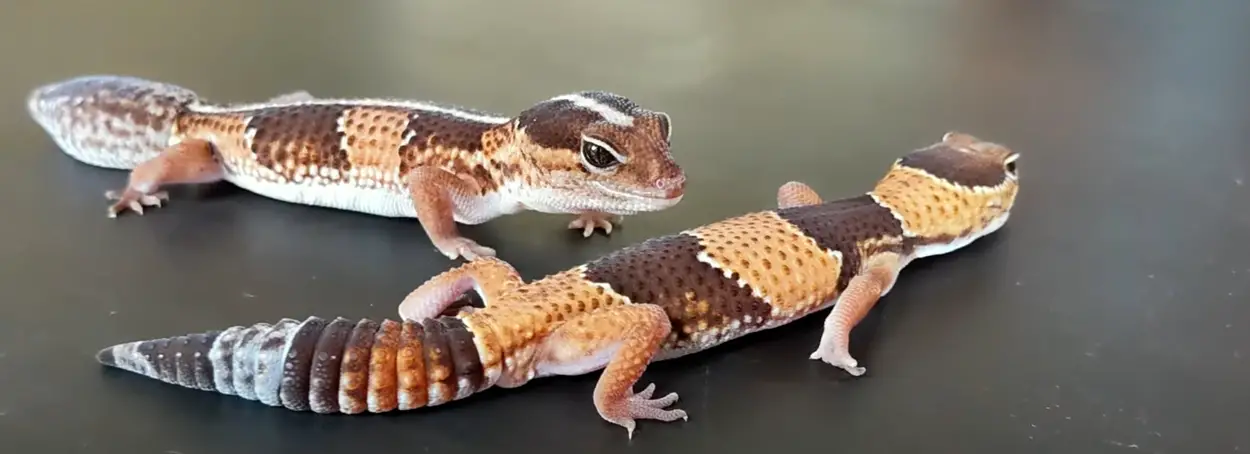
If you set up a nighttime “gecko watch,” expect to see your Fat-Tailed friend stir only as the sun dips. These geckos are staunchly nocturnal and stick close to the ground, spending daylight hours hiding in burrows, under rocks, or inside cozy hides.
Wild diets include whatever invertebrate they can snatch—insects, spiders, the occasional sneaky moth. Their solitary, shy personality means you’ll rarely see aggression. Instead, these geckos politely communicate with body postures or that signature tail wiggle. Calm, deliberate movements make them less startling than other, more frenetic geckos; their slow, inquisitive tongue-flick is oddly endearing to observe.
Next Generation Geckos: Reproduction in the Wild
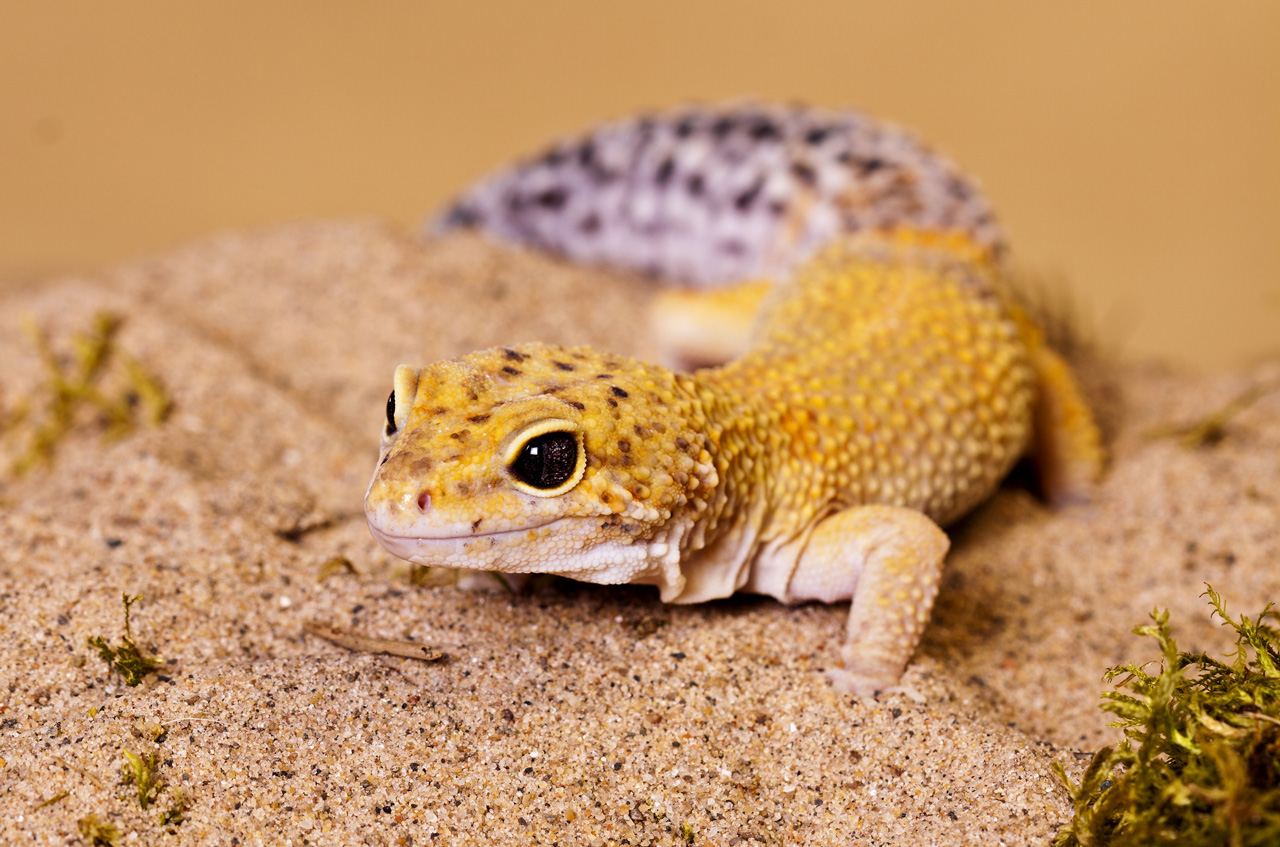
Breeding is another marvel. African Fat-Tailed Geckos’ reproductive cycles are closely tied to the rainy season. When conditions peak, females lay 1–2 eggs at a time, gently burying them in moist substrate. The incubation temperature can actually sway a hatchling’s sex (what a trick of biology!). Teens mature quickly, reaching sexual maturity at just 8–12 months. It’s a delight to watch a group of healthy juveniles explore, all energy and wide-eyed innocence.
Fat-Tailed Geckos in Captivity: A Growing Favorite
Leopard Geckos may dominate beginner guides, but more herp lovers are discovering the unique joys of Fat-Tailed Geckos. Their gentle nature and clear communication make them well-suited to anyone ready for a slightly more reserved, handleable pet.
They thrive in terrestrial, humid enclosures with abundant hiding spots and minimal climbing needs. What’s on the menu? Think live crickets, dubia roaches, and juicy mealworms, dusted with vitamins for optimal health. Expect a bond to form over the years; with attentive care, these geckos live a delightful 15–20 years! I’ve known breeders who swear their Fat-Tails have the most soothing, zen-like presence of any reptile.
That covers the basics of what you need to know as you consider keeping an African Fat-Tailed Gecko as a pet! But now, check out a great video from Clint, from the Clint’s Reptiles YouTube channel. This is a fun in-depth talk about other things to know about this cool gecko.
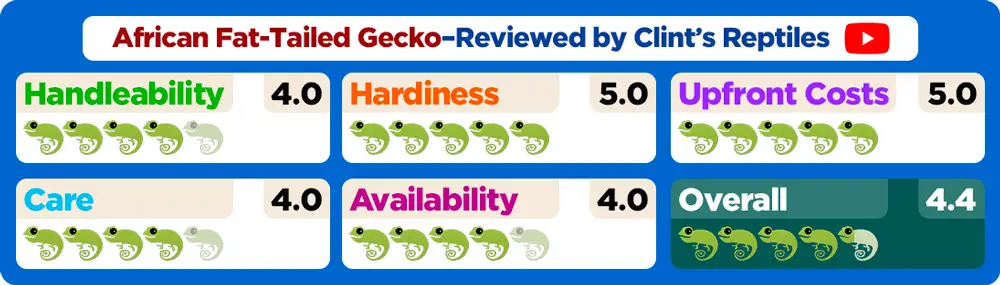
And while this is a spoiler, here’s a summation of what Clint shares in the video above as he evaluates the African Fat-Tailed Gecko from these 5 things to consider about any reptile you’re considering keeping as a pet: handleability, care, hardiness, availability, upfront costs, and then he gives an overall final score. Here are the scores as they appear in the video:
But, wait! Here’s another video to round out your knowledge of all the need-to-knows if you want to keep an African Fat-Tailed Gecko as a pet!
Conservation Notes: Keeping It Ethical
Thankfully, African Fat-Tailed Geckos are not currently endangered, though truly reliable data is sparse. Some regional concerns exist about local collection pressures, but the vast majority of individuals in the trade today are captive bred. It’s always crucial to confirm this before purchase to ensure you’re supporting ethical practices and helping protect wild populations.
Fun Fact Corner
- Stressed or startled? These geckos can squeak! The first time I heard one, I did a double-take—I’d never expected a gecko to “talk back.”
- To conserve every drop of water in their dry habitat, Fat-Tailed Geckos excrete uric acid rather than liquid urine, sorry–I know! Super gross!
- Dubbed the “Leopard Gecko of Africa,” thanks to their similarities in care and temperament (but with their own subtle twist).
Why the African Fat-Tailed Gecko Deserves a Closer Look
From their fascinating fat-storing tails to their elegantly subtle coloring and unhurried demeanor, the African Fat-Tailed Gecko stands out as a master of survival and adaptation. Resilient, resourceful, and reliably enchanting, they offer something unique to seasoned reptile enthusiasts and curious new keepers alike.
Welcoming one into your home isn’t just adding a pet; it’s an invitation to observe adaptation and calmness in motion. Take the time to learn their quirks, support ethical breeders, and you’ll be rewarded with years of understated gecko companionship.